
Kerd Farms Egg & Nutrition Outreach
One Egg. A Healthier Beginning.
Every child deserves the opportunity to grow, learn and thrive. Through community outreach, school visits and nutrition education, Kerd Farms seeks to make nutritious food more accessible while inspiring families and communities to prioritise children's wellbeing.
Why this matters
Agriculture should do more than produce food.
A child who is not eating enough of the right food finds it harder to concentrate, harder to grow, and harder to stay well. In the communities we work in, the gap is often not knowledge but access — and the two are addressed together or not at all.
Protein matters particularly in the years when a child is growing quickly. Eggs are one accessible source of high-quality protein and other nutrients, which is why we use them as the centrepiece of our outreach rather than as a novelty.
A single visit does not change a child’s diet. Nutrition education for pupils, parents and caregivers is what carries the message past the day of the outreach.
Our aspiration, stated plainly
We want to encourage access to protein-containing foods at mealtimes — according to what is available locally, affordable, suitable for the individual child and consistent with family circumstances. Eggs can form part of a varied, balanced diet; no single food supplies everything a child needs, and we do not suggest that every child must eat an egg at every meal.

The outreach work runs under the working name Kerd Farms Egg & Nutrition Outreach, with the internal “Good Protein” identity. Names and programme structure are confirmed by the business before publication.
From the field
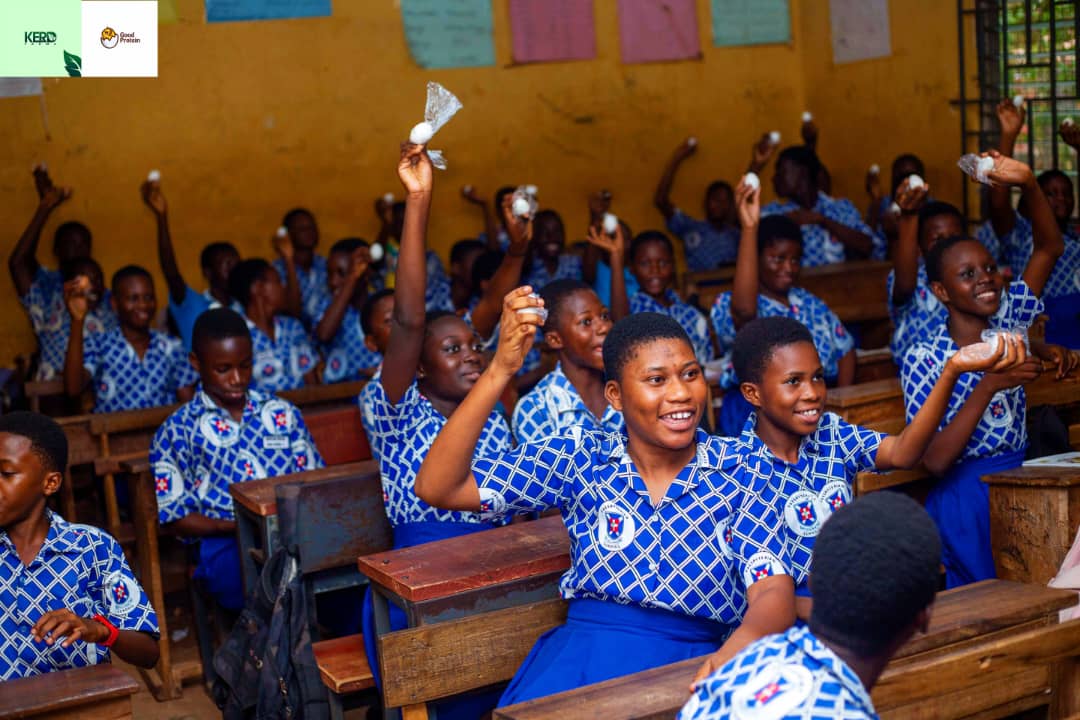
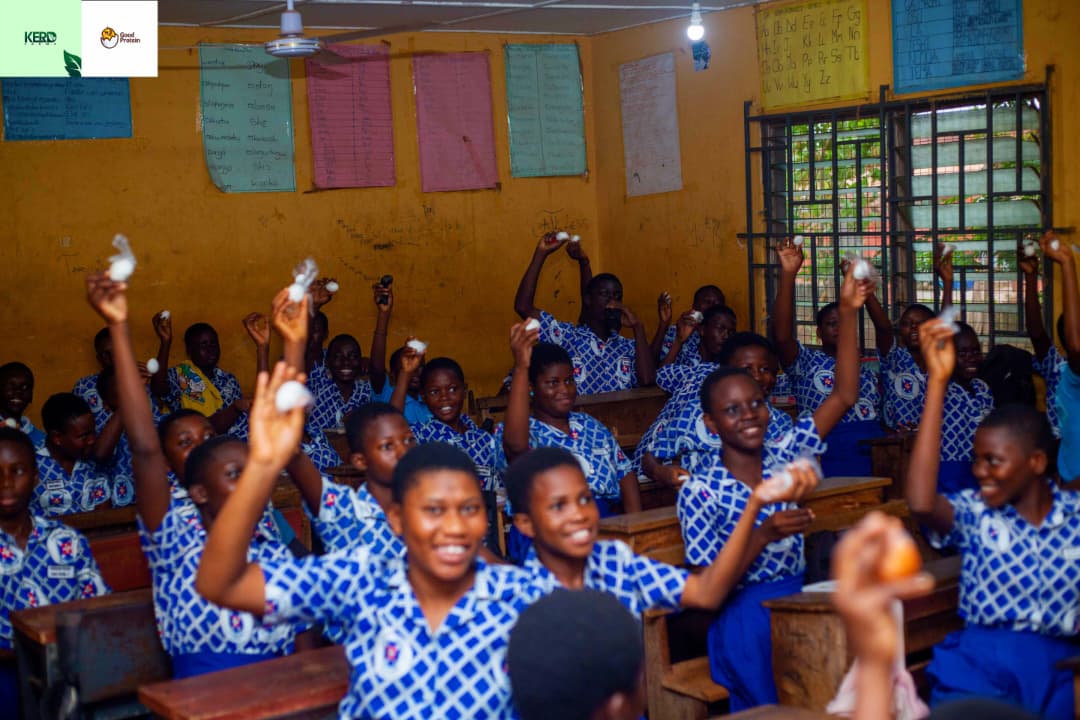
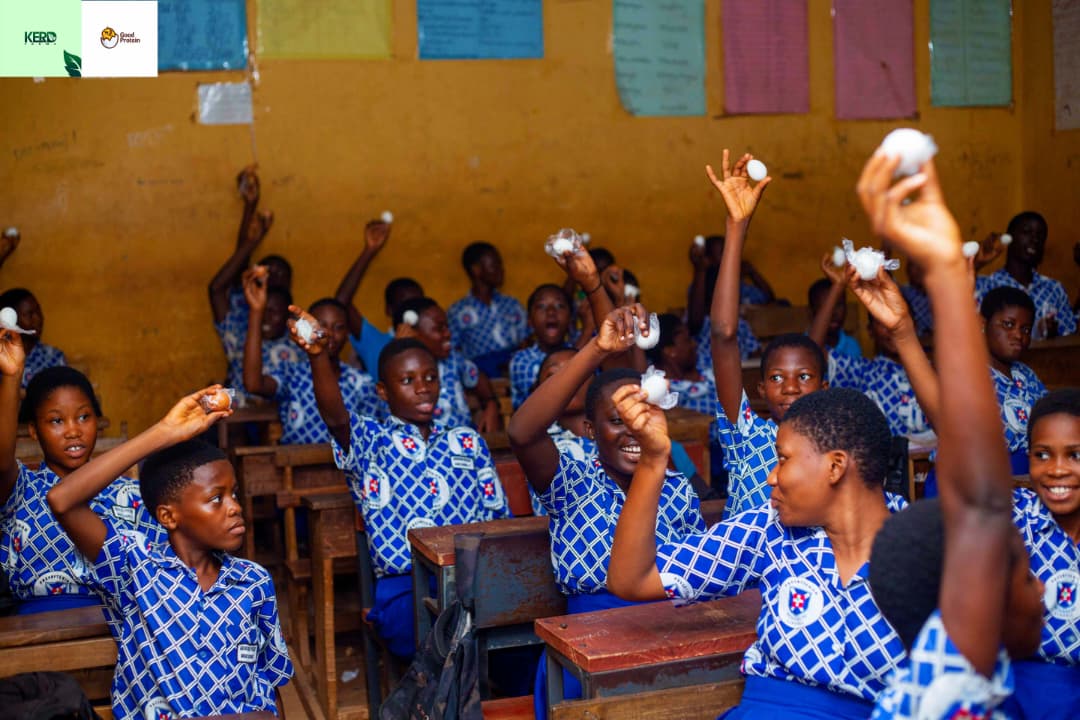
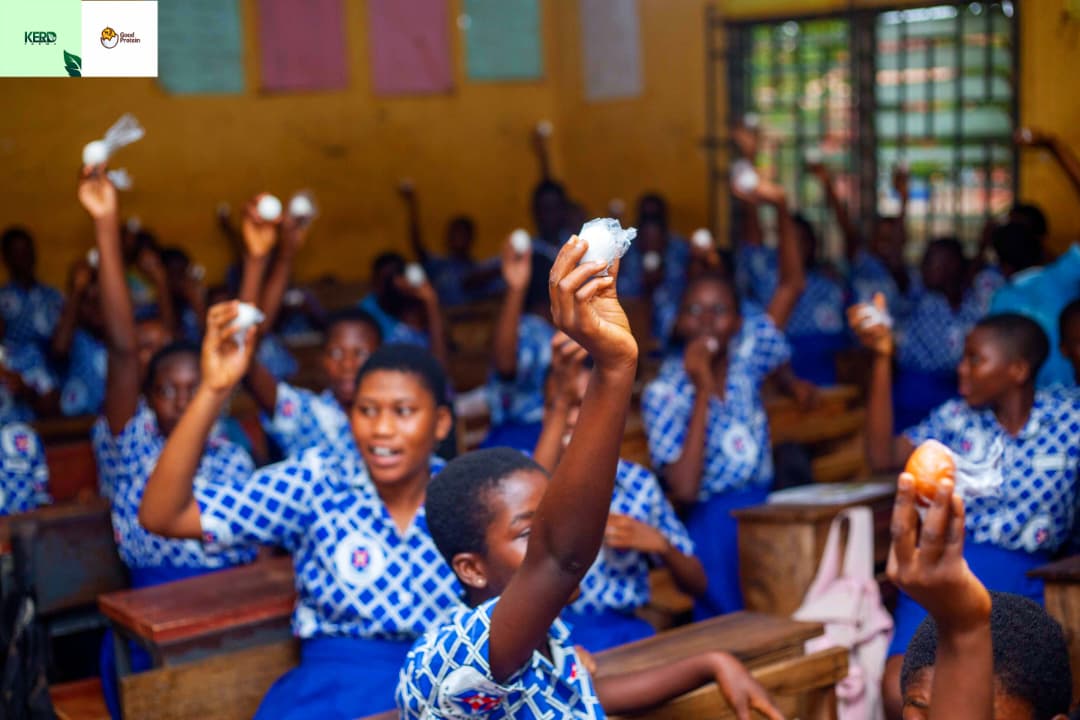
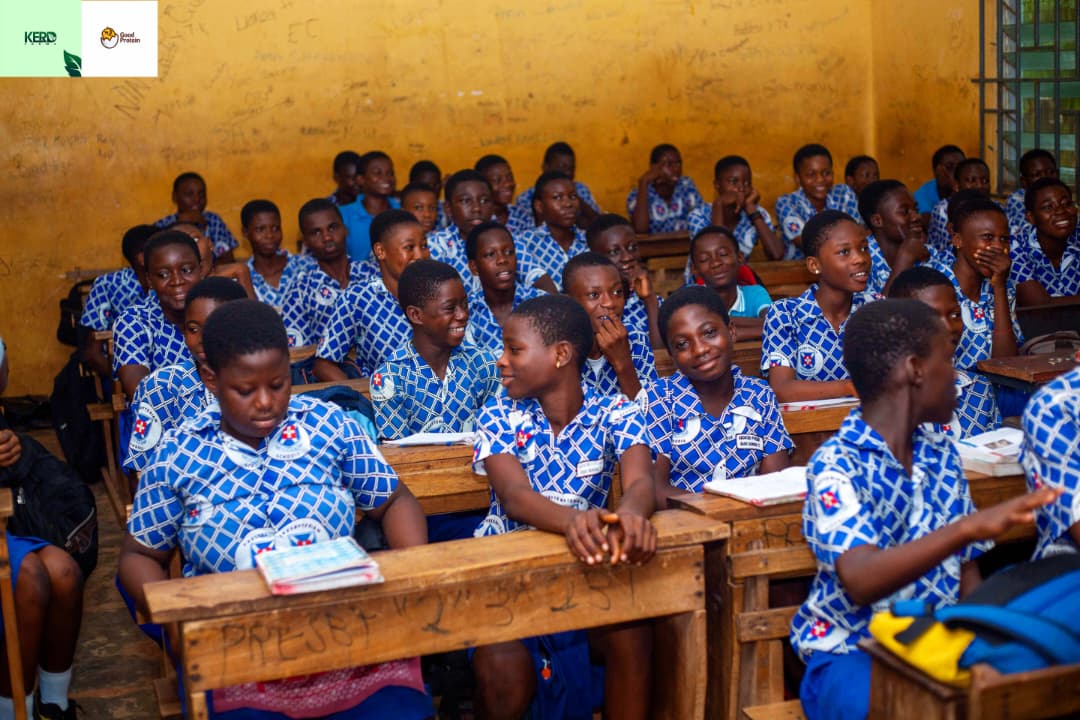
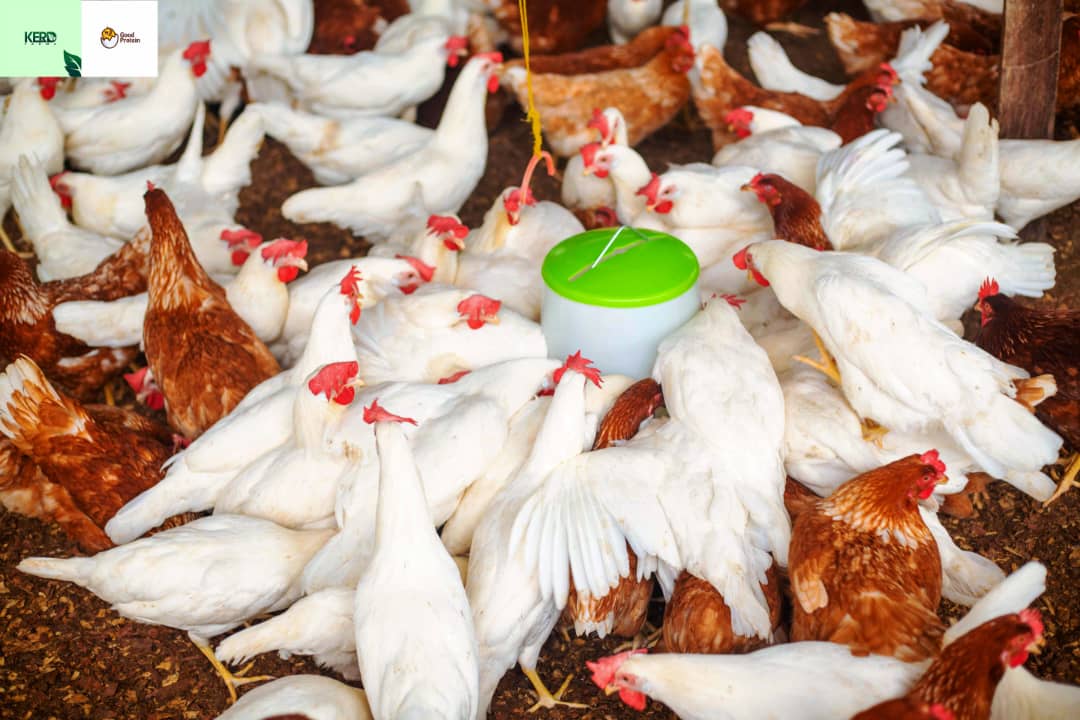
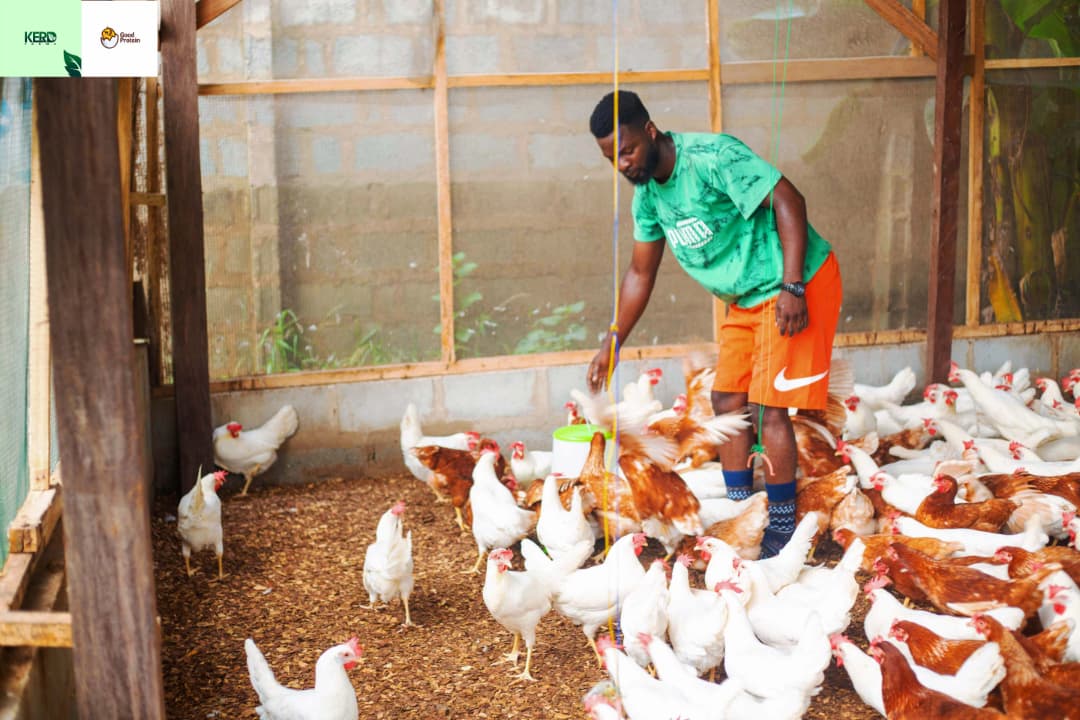
Our outreach, in pictures.
Glimpses of the work behind the programme — from the flock that lays the eggs to the pupils who receive them. Photographs are shared with the school’s and parents’ permission.
Why this matters
The Global Nutrition Picture
These are published, sourced figures from the organisations that measure them. Each one states the population, scope and year it refers to, and links to the original source. A global figure is a global figure — it does not describe Ghana specifically, and we do not present it as if it did.
Children under five living with stunting
Children under five years old who were too short for their age in 2024 — the consequence of chronic undernutrition, often before a child's second birthday.
- Population:
- Children under 5 years
- Scope:
- Global
- Data year:
- 2024
Stunting is not only about height. It is associated with reduced cognitive development and weaker lifetime earning potential, which is why the first 1,000 days matter so much.
UNICEF / WHO / World Bank — Joint Child Malnutrition Estimates (2025 edition)Children under five living with wasting
Children under five years old who were too thin for their height in 2024 — the result of recent, rapid weight loss or failure to gain weight.
- Population:
- Children under 5 years
- Scope:
- Global
- Data year:
- 2024
Wasting carries immediate health risk rather than a long-term development cost, which makes it the most urgent form of undernutrition to identify and treat.
UNICEF / WHO / World Bank — Joint Child Malnutrition Estimates (2025 edition)Children receiving a school meal
Children reached by school meal programmes worldwide, as recorded in the World Food Programme's global reporting on school feeding.
- Population:
- School-age children
- Scope:
- Global
- Data year:
- 2024
School feeding is one of the most widely delivered nutrition interventions in the world, and it also supports attendance. It is a system our outreach work sits alongside rather than replaces.
WFP — State of School Feeding WorldwidePeople facing hunger
People estimated to have faced hunger in 2024, around 8.2% of the world's population, according to the State of Food Security and Nutrition in the World.
- Population:
- Whole population
- Scope:
- Global
- Data year:
- 2024
Hunger and malnutrition are not only a question of how much food is produced globally, but of what reaches households, what it costs and what is in it.
FAO — State of Food Security and Nutrition in the WorldChildren under five stunted in Ghana
Stunting prevalence among children under five in Ghana, reported in the 2022 Ghana Demographic and Health Survey.
- Population:
- Children under 5 years
- Scope:
- Ghana
- Data year:
- 2022
Ghana has made real progress over three decades, but one child in roughly six is still too short for their age. This is the figure our own outreach work is ultimately about.
Ghana Statistical Service — 2022 Ghana Demographic and Health SurveyWhy eggs can be part of the solution
A practical source of protein, with real caveats.
Protein and nutrients
A single hen’s egg provides roughly six grams of protein along with a range of vitamins and minerals. It is one of the more affordable animal-source proteins in most Ghanaian markets.
Affordability and availability
Protein-rich foods are the hardest part of a healthy diet for many households to afford consistently, which is why working with the food that is already produced locally matters.
Food safety comes first
Eggs must be handled, cooked and stored properly. Children with an egg allergy must not be given them, and individual dietary needs always take precedence over a general recommendation.
Nutritional figures are approximate and drawn from published food composition data (see sources below). Dietary diversity, allergies, food safety and what a family can actually afford all have to be considered alongside protein content.
Programme activities
What the programme does, and what we intend to do.
The activities below describe the programme’s scope. They are plans and activities undertaken by the programme, not a claim about how many children or schools have been reached — those figures are published only once verified.
Free boiled-egg and pepper distribution
Provided during school visits and community outreach activities, prepared and transported under hygienic conditions.
Child-friendly nutrition education
Age-appropriate sessions that help children understand why a varied diet matters, delivered in language and terms they can use.
School engagement and community sensitisation
Working with teachers and community leaders so the message is reinforced beyond a single visit.
Parent and caregiver education
Practical guidance for households on including protein-containing foods in daily meals within their circumstances.
Sponsorships and product donations
Support from businesses and organisations to extend how many schools and children the programme can reach.
Nutrition awareness campaigns
Community events and communication that keep children’s nutrition on the local agenda.
Impact reporting
Programme figures
We publish outreach numbers only once they have been verified and recorded. Until then, this section says so rather than filling the space with numbers.
Our impact figures will be published as verified programme data becomes available.
Outreach record
Verified outreach events will be listed here as they are confirmed and approved for publication. Photographs of children are published only with the necessary permissions.
Sponsorship & partnerships
Ways to support the programme.
Sponsor a school outreach
Fund an outreach activity in a named school or community within an agreed area.
Donate eggs or programme supplies
Contribute product or the supplies needed to prepare and distribute it safely.
Support nutrition education
Help fund printed materials and the delivery of education sessions.
Become a long-term partner
Work with us on a recurring programme rather than a single event.
Volunteer
Give your time to help prepare, distribute or teach on an outreach day.
Propose a partnership
Tell us how your organisation would like to work with us.
Before you commit
The programme is an initiative of Kerd Farms. It is not presented here as a separately registered NGO, and we make no claim about tax deductibility. If your organisation needs documentation or a formal agreement before contributing, ask us and we will tell you exactly where we stand.
Interested? Write to us through the form, or message us on WhatsApp and we will arrange a conversation.
Food safety & child safeguarding
Non-negotiable requirements.
Any food we distribute to children must be safe, and any child involved in our work must be protected. These requirements are not optional.
Preparation and handling
Eggs must be fully boiled, prepared in clean conditions, transported safely and kept at a suitable temperature until served.
Allergies and individual needs
Children with a known egg allergy must not be given eggs. Supervision by responsible adults is required at every distribution.
Accompaniments
Pepper and any other accompaniment must be appropriate for the age group and individual dietary needs. Not every child can safely eat the same foods.
Consent and photographs
School visits and photography require the permissions of the school and of parents or guardians. We do not publish identifiable photographs or personal details of children without those permissions.